-
What is Trelleborg best known for?
-
Does Trelleborg make silicone seals?
-
Where can I get the official Trelleborg logo?
-
Is "PVC balloon" a Trelleborg product?
-
What is seal rubber and what types should I consider?
-
How do you cut PVC pipe straight without expensive tools?
-
How fast can Trelleborg deliver in a real emergency?
-
Is the cheapest seal rubber actually the most expensive?
Running out of time is the default state for maintenance teams and engineers. This isn't a tutorial on theory—it's the practical FAQ I've built after coordinating hundreds of rush orders. Here are the questions that come up the most when a deadline is breathing down your neck:
- What is Trelleborg best known for?
- Does Trelleborg make silicone seals?
- Where can I get the official Trelleborg logo?
- Is "PVC balloon" a Trelleborg product?
- What is seal rubber and what types should I consider?
- How do you cut PVC pipe straight without expensive tools?
- How fast can Trelleborg deliver in a real emergency?
- Is the cheapest seal rubber actually the most expensive?
What is Trelleborg best known for?
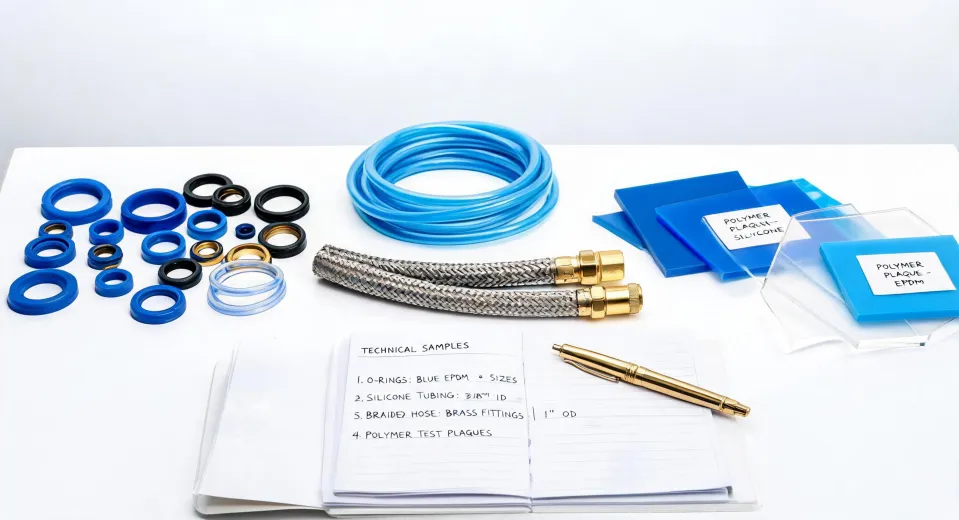
Trelleborg is a global engineering group that makes polymer and rubber products. In my world, that means O-rings, gaskets, custom seal rubber, hydraulic hoses, PVC components, and silicone seals. A lot of people assume it's just a truck tire brand, but it's much more. We have a huge material portfolio—EPDM, silicone, TPU, PTFE, HNBR—so we can usually match a part to your operating conditions rather than force a one-size-fits-all material. You'll find Trelleborg stuff in everything from food processing lines to offshore drilling rigs, which is exactly why I always ask about the application before recommending a product.
Does Trelleborg make silicone seals?
Yes, silicone is one of our go-to materials for seals. I've specified Trelleborg silicone seals for food and pharmaceutical lines because silicone handles high temps and is easy to sanitize. I went back and forth between standard EPDM and silicone for a recent job: EPDM was cheaper and worked for water service, but silicone won because of the 200°C washdown cycles. That decision isn't just about the seal itself—it's about what happens if the wrong material fails. A silicone seal might cost 30% more upfront but can save weeks of product contamination. If you're not sure, send us your application details—that's what we're here for.
Where can I get the official Trelleborg logo?
If you need the official Trelleborg logo for a spec, drawing, or purchase order, don't pull random images from Google. The authorized logo is available in our media library at trelleborg.com. That said, for most engineering documentation you don't need a logo file—you need the right material spec. I've seen approvals delayed because someone worried about a logo's resolution, but the real bottleneck was a missing material cert. Get the logo from us, of course, but put your energy into the technical data. We also require that partners use the logo correctly, so check the usage guide before putting it on a drawing.
Is "PVC balloon" a Trelleborg product?
"PVC balloon" is a search term that shows up, but it's not a typical Trelleborg SKU. What we do manufacture are PVC and polyurethane membranes, bladders, and inflatable seals used in everything from pipe plugs to lightweight inflatable structures. A PVC balloon, in the commercial sense, is usually a toy or decorative item—not our area. But if you need a PVC-based inflatable seal or a puncture-resistant bladder for an industrial application, that's closer to what we make. These inflatable parts are often custom-engineered, so send us your dimensions, working pressure, and environmental conditions, and we'll tell you if it's feasible.
What is seal rubber and what types should I consider?
Seal rubber is the broad category of elastomers used to make gaskets, O-rings, and sealing profiles. The most common types: Nitrile (NBR) for oil resistance, EPDM for weather and water, silicone for heat, and Viton/FKM for chemical resistance. In a pinch, I'd recommend not guessing—a wrong elastomer can swell, crack, or leak within days. We carry over 60 materials, and our engineer often says:
The cheapest seal rubber is the one that already fits your application.
If you're unsure, a quick compatibility check with fluid type, temperature, and pressure saves you a reorder. And remember, the material has to match not just the media, but also the hardness and compression set required for the flange to stay leak-free.
How do you cut PVC pipe straight without expensive tools?
When I need a clean, square cut on PVC pipe fast, I use a ratcheting pipe cutter or a fine-tooth saw with a miter box. Mark the line, wrap a piece of paper around the pipe, and align the edges—that gives you a square reference line. Then rotate the pipe while scoring, and make two or three passes before cutting through. Most people skip this and end up with an angled cut, which is a leak waiting to happen. If you're putting a flange or seal on the pipe, straight cut matters even more. Trelleborg doesn't make cutters, but we do make the rubber gaskets that depend on that square edge. A 30-second step can save you a 30-minute repair.
How fast can Trelleborg deliver in a real emergency?
Faster than you'd think—it's what my team does. In March 2024, a seafood processor called at 3 PM with a broken shaft seal and a plant restart scheduled for 5 AM. Normal lead time for that seal was four days. We found matching Trelleborg silicone stock 30 miles away, airfreighted it overnight, and the line started on time. It cost $400 extra in shipping (their alternative was $50,000 in lost product). The catch: this only works when the geometry and material are identified early, so call us with photos and part numbers in hand. Even after confirming the shipment, I kept second-guessing—what if the ID tolerance was off? Didn't relax until the seal landed and the line started. For small samples that can wait a few days, USPS First-Class large envelope starts at $1.50 as of January 2025—but a real emergency justifies express. Last quarter alone, we processed 47 rush orders with 95% on-time delivery; the rest failed because we didn't get a clear spec early enough.
Is the cheapest seal rubber actually the most expensive?
In my book, no—but you need to count what's not on the invoice. I've handled too many jobs where a cheap seal saved $50 on the part, then failed after six weeks. The real cost: unplanned downtime, emergency freight, overtime labor, and the risk of losing a customer. Per the FTC Green Guides, we also have to be careful when claiming environmental benefits—there's no "magic" material that's cheap, green, and eternal. So here's my TCO checklist:
- Material compatibility
- Lead time
- Stock availability
- Failure cost
If a supplier won't answer those, the quote isn't cheap—it's incomplete. Ask for the total landed cost, not the per-pound price.