The second Tuesday of March 2025 started like any other. Coffee, inbox, the usual queue of approval requests. Then our plant supervisor forwarded a quote that made me set the mug down.
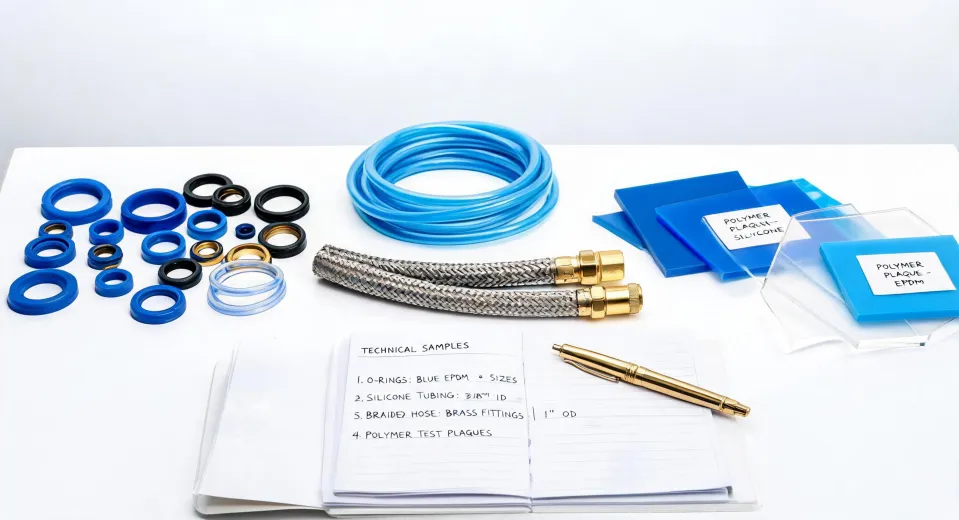
We needed to replace about 200 feet of compressed air and hydraulic hoses across two production lines, plus a full restock of elastomeric o-ring seals for the maintenance room. I'd budgeted $14,000 for the replacement cycle. The quote from a new supplier came in at $11,200.
My first thought: good, we're under budget. My second thought, about three seconds later: what am I missing?
I'm a procurement manager at a 140-person precision manufacturing company. I've managed our maintenance and MRO supply budget—roughly $480,000 a year—for 7 years, negotiated with 40-plus vendors, and logged every order in our cost tracking system. The pattern I've seen more often than not: when a quote lands 20% under expectation, there's a reason. Sometimes it's legitimate. Sometimes it's the reason you find out later.
Why the cheap quote looked so good
On paper, the budget supplier's quote wasn't obviously wrong. The hose diameters matched our specs. The seal sizes lined up with our inventory list. Delivery timing worked. The rep was responsive—more responsive than our usual distributor that week.
I've caught heat from my own team for questioning lower prices before. "You're a cost controller," my supervisor said. "Why are you arguing against a smaller number?"
Fair question. The honest answer is that I've been burned before. A few years back, I approved a budget vendor for a batch of custom gaskets based on a clean price comparison. The gaskets failed within six months because the actual material didn't match the spec sheet. The redo cost $1,200 plus a wasted weekend. That experience taught me the cheapest quote isn't the cheapest option until you've read the fine print.
So I wanted to verify the $3,100 difference. Actually, I wanted to prove the budget quote was the right choice—it would make my quarterly savings numbers look great.
Then our lead engineer asked a question I couldn't answer.
The question: is thermoplastic elastomer silicone?
We were reviewing the seal order line by line when the engineer pointed at the material column. "These are TPE," he said. "Did you confirm the application calls for TPE, not silicone? The o-rings inside the heated press area need to handle sustained heat."
I stared at the row. Honestly, I'd heard TPE and silicone used interchangeably around the plant for years. Both feel like rubber. Both are used in seals. How different could they be?
Very different, it turns out.
Silicone is a thermoset elastomer—once cured, it holds its structure under heat. Thermoplastic elastomer (TPE) can be remelted and reprocessed, which is nice for manufacturing but gives it a different heat tolerance profile. Put a TPE seal where silicone is required, and you're gambling on how long it lasts before it softens or deforms.
That's the kind of industry misconception that survives because consumer products blurred the line. TPE shows up in everything from phone cases to kitchen utensils, and the phrase "rubber-like" gets thrown around loosely. For a procurement person who isn't a materials specialist, the confusion is easy to carry around without ever knowing it's a problem.
I called the budget supplier and asked point-blank: are these seals TPE or silicone, and can you send the technical data sheet? The sales rep said—I remember this almost word for word—"They're basically the same, both rubber seals." When I pressed for temperature ratings, he promised to email the spec. It never showed up.
"They're basically the same, both rubber seals." — budget supplier sales rep
That answer was the turning point.
What the Trelleborg catalog actually showed me
I walked over to our engineering team's reference shelf and pulled the Trelleborg catalog. Full disclosure: I'd opened it before, but I'd always compared Trelleborg industrial hoses and seals against cheaper options and concluded they were a premium brand with premium prices. I assumed I'd be paying for the name.
Reading it more carefully changed my mind.
The catalog doesn't just list products. It lists the elastomer family for every seal—with temperature ranges, durometer hardness, and compression set data. The hose section shows working pressure, burst pressure, bend radius, and chemical compatibility. The dimension tables reference ISO 3601-1, the international standard for O-ring tolerances, so the specs align with what our machinery manuals already use.
I found the TPE-vs-silicone answer in about 60 seconds. I found confirmation that our heated press area required silicone-based elastomeric o-ring seals. And I found something I hadn't expected: Trelleborg covers both rubber and polyurethane material families, all with documented performance data. For someone managing a maintenance budget across multiple production lines, that breadth means one technical source for most of our applications instead of juggling five different vendors.
That's when my "premium is just a logo" theory started cracking.
Doing the math on the 'savings'
Here's the part I wish more procurement conversations started with: the actual cost comparison.
- Budget supplier quote (hoses + seals): $11,200
- Trelleborg quote (via authorized distributor): $14,300
- Sticker difference: $3,100
That $3,100 looks like real money. It is real money. But then I ran the total cost:
The budget quote listed TPE seals for an application that called for silicone. If installed in the heated press area, the expected rework cost—labor, parts, and downtime—sat between $4,000 and $6,000 based on our maintenance records.
The budget hoses showed a lower working pressure than the Trelleborg catalog said the application needed. Not an immediate failure, but running at 80% of rated capacity is not where I want a production line.
Engineering would need 3-4 hours to verify the budget supplier's material claims. That's $200-300 of engineering time spent redoing what the catalog already documents.
The budget supplier charged a 15% restocking fee on returns. On an $11,200 order, that's $1,680 of risk if any spec turned out wrong. Our distributor offered free 30-day returns.
Add it up, and the picture flips. The "cheaper" option carried potential costs that exceeded the price gap—while the Trelleborg quote included the documentation we needed to make the decision confidently in the first place.
The $3,100 difference wasn't savings. It was the price of uncertainty.
Quality is brand image, even when the customer never sees the part
One more thing that conversation changed: how I think about quality and brand perception.
Our production lines aren't a showroom. No customer ever sees the hoses or the o-ring seals. But when a seal fails in the press area, the line stops. When the line stops, our lead times slip. When lead times slip, customers notice—not the seal, but the late shipment.
That's how a reliable elastomeric o-ring seal becomes part of brand reputation. The hose that doesn't burst isn't just a hose—it's the reason nobody has to explain a missed deadline. Getting the material right, and knowing it's right because the documentation proves it, is how procurement protects both the budget and the company's word.
What I'd do differently
If I could redo that decision, I'd start with specifications instead of price. I let the $3,100 gap drive the conversation, and that's the wrong way to evaluate industrial components. The right sequence: define the application, verify the material, compare total cost, then negotiate.
Looking back, I should have asked the TPE-vs-silicone question on day one. I didn't know enough to ask it, which is exactly why technical documentation matters. I don't need to be a materials engineer. I need a supplier who makes engineering knowledge accessible enough for a procurement manager to act on.
We also updated our procurement policy. Any order above $5,000 now requires three quotes and a technical review before material substitutions are accepted. That policy has caught two questionable substitutions this year already, and both times the "cheaper" alternative would have failed on spec.
To be clear, I'm not saying Trelleborg is the right answer for every application. There are plenty of situations where a budget hose or seal is perfectly fine. What I'm saying is that the decision should be made with information, not just a number.
The $3,100 I thought I was saving turned out to be the cost of confidence. What we bought instead—material certainty, reliable documentation, fewer maintenance surprises—has shown up in steadier production and, somewhere down the line, in a customer shipment that arrived on time for reasons nobody had to investigate.
That's the kind of quiet work procurement should be doing.