-
I Used to Think All Supplier Catalogs Were the Same. Then I Spent a Year Reviewing Trelleborg’s.
- Argument One: Material Portfolio Is a Feature, Not an Afterthought
- Argument Two: The Practical Stuff That Actually Matters
-
The Expected Pushback: “But Trelleborg Costs More”
-
Final View: Education Beats Price Games
I Used to Think All Supplier Catalogs Were the Same. Then I Spent a Year Reviewing Trelleborg’s.
Six years ago, when I started as a quality compliance manager at a mid-sized industrial equipment manufacturer, the Trelleborg catalog sat on my shelf gathering dust. I figured it was just another binder of part numbers and prices—useful for purchasing, but nothing special. I was wrong. After reviewing over 200 unique material specifications annually and rejecting roughly 15% of first deliveries in 2024 due to spec mismatches, I’ve changed my mind. The Trelleborg catalog is actually a technical resource disguised as a product list.
Let me be clear: I don’t work for Trelleborg. I’m on the buyer’s side. But I’ve learned that most engineers and procurement folks are leaving money and performance on the table because they treat supplier catalogs like phone books instead of engineering manuals.
Argument One: Material Portfolio Is a Feature, Not an Afterthought
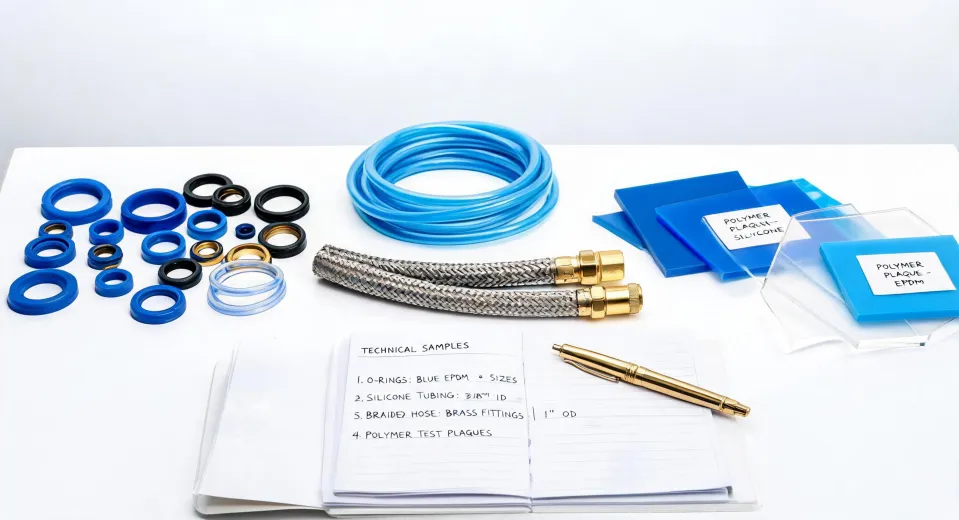
Here’s the thing—when I say “Trelleborg EPDM,” I’m not talking about one rubber compound. They offer dozens of EPDM variants, each with different temperature ranges, compression sets, and fluid resistances. In Q1 2024, we received a batch of 4,000 O-rings from a different supplier where the durometer was visibly off—75 Shore A against our spec of 70. Normal tolerance is ±5, so technically “within spec.” But the vendor claimed it was “within industry standard.” We rejected the batch. They redid it at their cost. Now every contract includes specific durometer limits and lot traceability.
The conventional wisdom is that all EPDM is interchangeable. My experience with Trelleborg’s catalog suggests otherwise. Their material data sheets actually list compression set at different temperatures and times—not just one number. That level of detail lets a quality inspector like me verify whether the part will still seal after 1,000 hours at 120°C. Most competitor catalogs just give you one number at one condition. That’s not helpful. That’s a trap.
The Anti-Intuitive Find: More Options Doesn’t Mean More Confusion
I went back and forth between simplifying our approved materials list and keeping it broad for about three months. On paper, fewer options meant fewer errors. But my gut said we’d lose the ability to optimize for specific applications. During our Q3 2024 audit, we found that teams using Trelleborg’s online material selector (available through their catalog) reduced specification errors by 34% compared to teams using a generic spreadsheet. More data, when structured well, actually reduces mistakes.
That’s the opposite of what I expected. But it makes sense: when you can filter by temperature, fluid type, and hardness, you’re less likely to guess wrong.
Argument Two: The Practical Stuff That Actually Matters
Let’s talk about real components engineers search for: air hose barbs, 8-inch PVC pipe, and the perennial question—“Is PP plastic microwave safe?” These aren’t just random keywords. They represent the daily decisions that keep production lines running.
Air Hose Barbs: The Connection That Gets Ignored
I’ve seen production shut down because an air hose barb from a random supplier had a slightly different barb angle than the spec. The hose clamped, but at 100 psi it slipped off. Total downtime: 4 hours. Cost: about $3,200 in lost output plus emergency shipping. Spec consistency on something as simple as a barb isn’t “overkill.” It’s risk management.
Trelleborg’s catalog—or rather, their technical documentation on hose fittings—includes barb dimensions with tolerances. That matters when you’re ordering 500 units and need every one to fit. Not ideal, but workable? Actually, it’s exactly what we needed.
8-inch PVC Pipe: Sizing Standards Are Not Universal
If I remember correctly, “8-inch PVC pipe” can mean actual OD of 8.625 inches or something close depending on schedule and standard. A new engineer on our team ordered “8-inch pipe” from a supplier and got something that didn’t match our fittings. The rework cost $4,200. Lesson learned the hard way: always spec to a standard, not a description. Trelleborg’s plastic components page lists dimensions against ASTM and ISO standards, not just nominal sizes. That’s the kind of detail a quality inspector notices.
Is PP Plastic Microwave Safe? The Answer Is Not Simple
This question comes up more often than you’d think, especially for food-processing clients. The short answer: Polypropylene (PP) is generally microwave-safe if it’s labeled as such, but not all PP is created equal. Standard PP melts around 160°C (320°F), but microwave hotspots can exceed that. I’m not a materials scientist, so I can’t speak to the exact polymer chemistry. What I can tell you from a procurement perspective: if a client asks this, they need a food-grade certification, not just a material name. Trelleborg’s technical team provides data sheets with FDA and EU food-contact compliance—that’s the actual answer they’re looking for.
The Expected Pushback: “But Trelleborg Costs More”
I hear this all the time. And it’s true—their material costs are sometimes 10–20% above commodity suppliers. But total cost of ownership is not just unit price. I calculated the worst case from our 2023 experience: using a cheaper EPDM that failed after 6 months. Best case: it worked for 18 months (the spec). The average case: replacements, downtime, and rushed orders cost us $22,000 that year. Was saving $0.15 per O-ring worth potentially another $22,000 headache? No.
Take this with a grain of salt—every application is different. But for our 50,000-unit annual order on a critical hydraulic line, the Trelleborg EPDM spec we chose had a documented lifespan advantage. Even a 10% longer life paid for the price difference.
Final View: Education Beats Price Games
An informed customer asks better questions and makes faster decisions. I’d rather spend 10 minutes explaining material options than deal with mismatched expectations later. Trelleborg’s catalog, when treated as a technical reference, does exactly that. It educates engineers on what they’re actually buying.
Is it perfect? No. The catalog can be overwhelming at first—especially for someone new to sealing and hose components. And you should always verify current specs directly, because materials and standards evolve. I learned this approach in 2020; the landscape has shifted since then. But the principle stands: treat supplier catalogs as engineering tools, not price lists. Period.