Let me be blunt: if you’re in an emergency and you choose the cheapest industrial hose you can find, you’re not saving money. You’re placing a bet with terrible odds. In my work coordinating rush replacements for manufacturing plants and processing facilities, the lowest quote has ended up costing my clients more in roughly 60% of the cases I’ve handled. Not because those cheap hoses are always junk—but because downtime, labor, and a second delivery turn a “bargain” into a loss before the line is ever back up.
I’ve spent more than a decade on the “call us when it broke” side of industrial supply. In March 2024, a food processing facility called at 4:15 PM with a washdown hose that had burst, and a compliance audit scheduled 36 hours later. That moment didn’t just make me careful—it made me opinionated.
The Emergency Math That Changed My View
Here’s the thing: price per foot is almost useless when a line is down. The only number that matters is total cost to get the process running again and keep it running.
In that March 2024 call, I quoted a Trelleborg industrial hose rated for hot water and repeated flexing. It was $340, and I could get it delivered before the morning shift. A vendor the facility manager had found online offered a cheaper alternative at $185. It wasn’t really an alternative. It was a rigid black PVC pipe assembly with a couple of adapter fittings—the kind of thing that works fine for static drainage but not for a moving, pressurized washdown line.
The numbers said save $155. My gut said this would end badly. I told the manager that the black PVC pipe wasn’t designed for vibration or hot-water cycling. He chose the $185 option anyway. At 5:10 AM, a fitting split, flooded the washdown area, and shut down the rinse line.
Then the real invoice showed up: $340 for the Trelleborg industrial hose, $220 for Saturday delivery, $450 for overtime labor, plus four hours of lost production. I’m not 100% sure of the exact production loss, but the extra cash cost alone was around $860 on a mistake that was supposed to save $155. And that’s before considering the audit that almost got postponed.
From the outside, it looks like the emergency began when the hose burst. It actually began months earlier, when someone decided a lower quote was more important than a rating that matched the job.
What “Trelleborg Products” Actually Do for a Buyer
My view isn’t that you should always buy the premium brand. It’s that you should buy the right component for the application, then compare total installed cost. Trelleborg products tend to be priced above entry-level alternatives. They also tend to arrive with data, material certifications, and traceability that let me confirm a hose is correct before I put it into a machine. That’s not a luxury. In an emergency, it’s the difference between ordering with confidence and ordering with hope.
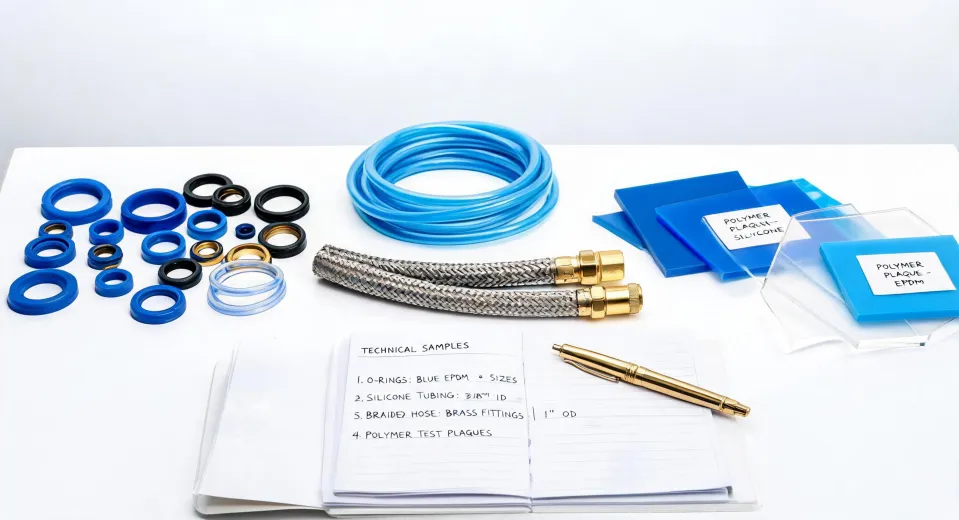
Trelleborg products cover everything from O-rings and gaskets to industrial hoses and custom polymer components. What they have in common is that a lot of engineering went into matching material to application. What I mean by total cost is simple: the price of the hose, plus freight, plus installation labor, plus the cost of every hour the process is down. If I have to replace a component twice, the second replacement doubles the labor and downtime costs. A $340 hose that lasts is cheaper than a $185 hose that fails in a week.
Now, to be fair, Trelleborg isn’t the only company that makes engineered hoses. But when a client asks me to solve an urgent problem, I need a supplier whose documentation I trust, and whose product range can cover the specific media, pressure, and temperature involved. Among Trelleborg products, the industrial hoses I spec most often are those where the material construction—EPDM, silicone, TPU, or a blend—matches the exact service. That matching is the real value. The brand name is just a shortcut to confirmed engineering.
The “Black PVC Pipe” Trap
I’ve lost count of the requests that start with “can’t you just use black PVC pipe?” It usually comes from someone who sees a rigid black pipe in another section of the plant and assumes cheap plastic is interchangeable. It’s not.
A hose is designed to flex, absorb vibration, and handle dynamic pressure. A black PVC pipe is designed for static, supported runs. When you put a rigid pipe where an industrial hose belongs, you get stress fractures, leaks, and sudden failures. That’s not the pipe’s fault—it’s a mismatch between the product and the application. The same logic applies if you try to substitute general-purpose tubing for a hydraulic hose, or a non-food-grade material in a food-contact line.
Once you understand that distinction, “cheapest” becomes a secondary question. The first question is: what is this component actually required to do?
Is Silicone Recyclable? Ask the Right Question
Another question I hear from procurement teams is, “Is silicone recyclable?” It’s a fair question, especially with sustainability pressure from customers and investors. The short answer is yes, but not in the way people expect.
Silicone can be recycled through specialized programs that grind scrap silicone and reform it into new products like industrial gaskets, tubing, or vibration isolators. It is not curbside recyclable, and a generic “recyclable” label can be misleading. Per the FTC Green Guides (ftc.gov), environmental claims need to be substantiated, and if a meaningful share of customers can’t actually recycle a product, the claim should be clearer about what’s true.
When I evaluate silicone foam suppliers, I don’t ask “Is silicone recyclable?” as a yes/no question. I ask: Do you have a take-back program? Do you have scrap-reclaim data? Can you show me a reprocessor that actually accepts this material and reuses it? Those questions separate a supplier who thinks about the full product lifecycle from one who just prints a green label on a brochure.
That same mindset applies to any material decision. Don’t make buying decisions based on one attribute like “recyclable” or “cheap.” Make them based on the whole set of requirements and the whole cost of getting it wrong.
Three Questions I Ask Before Every Rush Order
In the middle of an emergency, the pressure is to move fast. But speed without discipline is expensive. These are the three questions I ask before honoring any rush order:
- What is the exact service condition? Pressure, temperature, media, flexing, chemicals, and any regulatory requirements. If you can’t tell me, we’re not ordering yet.
- Does the replacement have the same rating and certifications? Not “similar.” The same. This is where material data sheets and traceability matter.
- What is the real deadline, and is there a buffer? If the component arrives at 11:00 AM and the line must run at noon, there is no buffer. That’s not a plan; it’s a hope.
I ask these questions whether we’re buying Trelleborg industrial hose, a silicone gasket, or a batch of rubber sheeting. The process should be the same, because the cost of a wrong answer is the same.
Why I’ll Keep Pushing Back on “Cheapest First”
I get why people choose the cheap option. Budgets are real, and no one wants to look like they’re wasting money. But from experience, “cheap” is a terrible risk strategy for critical components. The hidden costs—freight, overtime, production loss, compliance risk—are real costs, even when they don’t show up on the purchase order.
Look, I don’t care if a client picks Trelleborg or another reputable manufacturer. I care that the component they pick is engineered for the job, documented, and delivered when promised. If measuring your supplier by unit price alone feels like smart procurement, I’d ask what a repeat failure will cost. Then ask for a hose you only have to install once. That’s not the cheapest option. It’s the cost-efficient one—and in a crisis, it’s the only rational one.