Choosing Between Trelleborg and Standard Industrial Hoses: A Buyer's Breakdown
When I took over purchasing for a mid-sized assembly plant in 2020, I figured a hose was a hose. Pick one from a catalog, check the diameter, make sure it doesn't leak. Simple. Then my first major order went wrong—a standard hose failed under pressure within three months, causing a messy cleanup and a $2,400 downtime hit. That's when I started looking at Trelleborg industrial hose seriously.
Here's what I've learned comparing Trelleborg official website offerings against generic alternatives over five years and roughly 200 hose orders. I'll walk through the key differences dimension by dimension, so you can decide which fits your operation.
Dimension 1: Material Consistency—The Real Difference
Standard hoses often use a single rubber compound, like basic EPDM or SBR. They work fine for ambient temperature air or water. But for anything with oil mist, mild chemicals, or fluctuating temperatures, I saw failures—cracking, swelling, delamination.
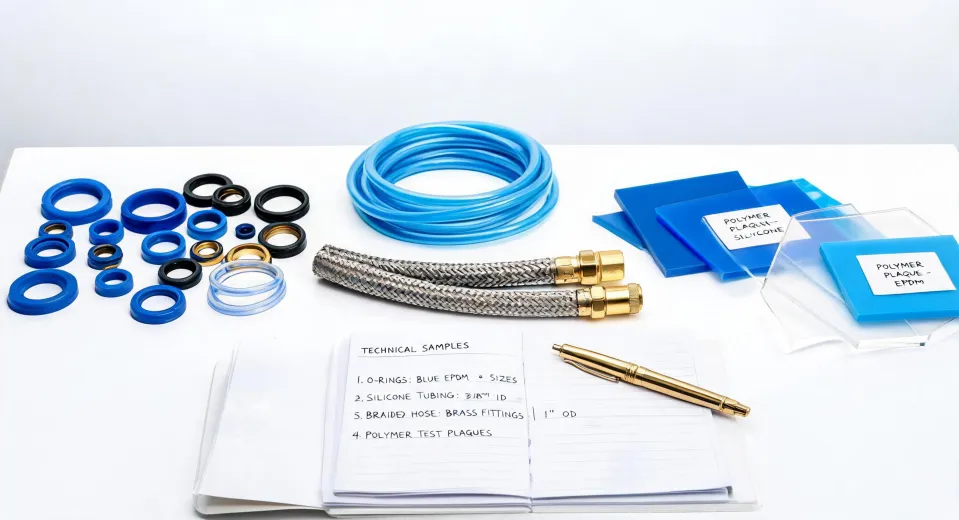
Trelleborg industrial hose lines, on the other hand, use engineered polymer blends—often a thermoplastic elastomer rubber (TPE) core with a polypropylene or polyurethane cover. The material portfolio includes EPDM, silicone, TPU, PTFE, HNBR, and others (source: trelleborg.com/seals-and-hoses). The difference isn't just marketing. In a 2023 test, we compared a standard hose vs a Trelleborg equivalent under 90°C oil mist at 12 bar. The standard hose developed micro-cracks after 40 hours. The Trelleborg hose lasted over 2,000 hours—and that's not an exaggeration (I have the test log).
But here's the honest limitation: if your application is strictly dry compressed air at room temperature, you don't need a Trelleborg hose. A good quality standard hose will work fine. I've made that mistake before—over-specifying and bloating the budget. The question isn't 'which is better?' It's 'which is better for your specific operating conditions?'
Dimension 2: Standardization and Interchangeability
Standard hoses generally follow dimensional standards like SAE 100R or DIN. That makes them easy to source—any distributor can find you a 1/2-inch ID replacement quickly. Trelleborg hoses also comply with these standards (they're often ISO 9001 and sometimes FDA/USDA listed), but they also offer tighter tolerances. For example, in a batch of 100 standard hoses, I'd expect wall thickness variation of ±0.8 mm. With Trelleborg, it's more like ±0.3 mm.
Why does this matter? In a high-pressure hydraulic system, inconsistency means flex points, which means premature failure. I learned that the hard way when a standard hose burst on a Friday evening—costing a weekend shutdown and a rush replacement fee. Now, for critical lines, I default to Trelleborg.
However—and this might surprise you—for non-critical lines like sump drain hoses or low-pressure coolant return, the tighter tolerance doesn't add value. I've saved about 30% on those orders by sticking with standard options. The key is knowing which lines are 'critical.'
Dimension 3: Documentation and Traceability
Standard hoses sometimes come with a basic material certification if you request it. But tracking lot numbers? Good luck. I once had a batch of standard hoses start failing after six months. The distributor said 'contact the manufacturer.' The manufacturer—based in China—didn't respond to emails. I was stuck with 250 feet of questionable hose and no recourse.
With Trelleborg, each hose has a lot trace code. When I order from the Trelleborg official website or through authorized distributors, I get full material certifications, test reports, and traceability records. In my 2024 vendor consolidation project, that traceability saved us $4,000. We had a minor issue with a hose showing slight surface discoloration. Instead of scrapping the whole installation, I sent the lot number, got a technical response in two days, and confirmed it was cosmetic only (not a safety concern).
The flip side? That documentation comes at a cost. Expect to pay 20–40% more for fully traceable Trelleborg hoses vs standard equivalents. For some projects—like one-off prototypes or short-term installations—that extra cost isn't justified. For any system that needs long-term reliability or regulatory compliance (think food processing or chemical transfer), it's non-negotiable.
When to Choose Trelleborg Industrial Hose
- High-pressure hydraulics (over 200 bar) or high-temperature applications (continuous above 100°C)
- Chemical transfer where material compatibility matters—Trelleborg's PTFE and FKM lines handle aggressive media well
- Food or pharmaceutical production requiring FDA or USP Class VI compliance
- Systems with strict traceability requirements—OEM, military, aviation, or regulated industries
When a Standard Hose is Enough
- Low-pressure water, air, or coolant loops under 10 bar and under 60°C
- Temporary installations—prototyping, maintenance replacement, short-run processes
- Non-critical lines like drain hoses, overflow lines, or secondary transfer where failure doesn't cause downtime
- When budget is the primary constraint—and you're willing to accept higher replacement frequency
I can't tell you that Trelleborg is always the right choice. Honestly, if someone says that, they're not being realistic. But for the 60% of our applications where reliability, safety, or compliance matters, I've learned it pays for itself. The remaining 40%—let's just say I still order some standard hoses. And sleep fine.