There’s No One‑Size‑Fits‑All Answer
I’ve been managing procurement for a mid‑sized industrial automation company for about six years. Our annual spend on sealing components, plastic parts, and tubing runs roughly $180,000 across 30+ vendors. Early on, I thought the lowest quote was always the smart move. But after tracking every invoice and comparing total cost of ownership (TCO), I realized that the best choice depends entirely on your specific situation—order size, application, and whether you need customization or off‑the‑shelf standard parts.
Let’s break it down into three common scenarios. Each one has a different answer. I’ll tell you what I’ve learned—sometimes the hard way.
Scenario A: Small‑Volume Custom Seals & Polymer Components
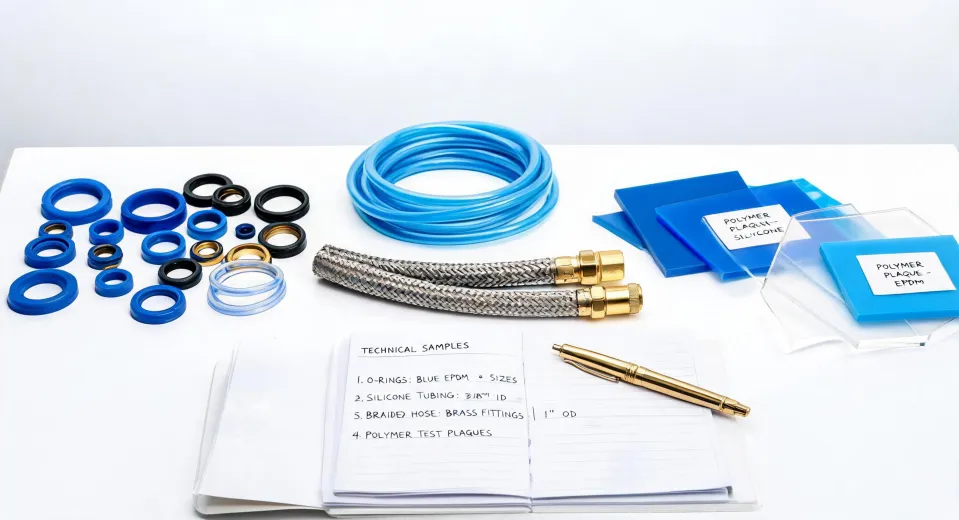
You’re a startup or a small R&D team. You need, say, 25 custom EPDM O‑rings or a handful of polypropylene plugs in a non‑standard size. The big suppliers either ignore you or hit you with a $500 tooling fee.
What most people don’t realize is that many established manufacturers have “quick‑turn” divisions or regional facilities that specialize in low‑volume work. For instance, Trelleborg’s Minnesota Rubber & Gasket group routinely handles orders under $500. I placed a $1,200 prototype order with them last year (10 different custom silicone gaskets). They didn’t treat me like a small fish—they assigned an applications engineer and waived the mold charge because I agreed to a simple production schedule.
Real take‑away: Small doesn’t mean unimportant. A good supplier will see the potential and work with you. My rule: if a vendor can’t give me a straight answer on total cost (including setup, shipping, and any minimums) for a small order, I move on. I’ve built a simple TCO spreadsheet that adds a column for “hidden fees per unit”—it’s saved me thousands.
Cost‑Control Tip for This Scenario
- Always ask: “Do you have a low‑volume program or a regional plant that takes small runs?”
- If tooling is required, negotiate a shared tooling cost that gets refunded after a certain production volume.
- Don’t assume “standard” materials are cheaper. Often, a custom compound (like a specific EPDM shore hardness) reduces scrap and rework, making it more cost‑effective per part.
Scenario B: Large‑Volume Standard Components
You’re ordering 50,000+ nylon cable ties, standard NBR O‑rings, or bulk PVC tubing. Here, the game changes. Price per unit drops, and shipping becomes a bigger % of total cost.
I learned this one the expensive way in Q2 2024. We needed 10,000 ft of polyethylene tubing for an ongoing production line. Vendor A quoted $0.12/ft with free ground shipping. Vendor B quoted $0.10/ft but charged $350 flat for LTL. I almost went with B until I calculated TCO over 12 months (we reorder quarterly). Vendor B’s shipping would hit us four times: $1,400 extra. Vendor A’s price was actually $0.08/ft after volume discount—they just didn’t advertise it. The difference? We saved about $2,600 a year by choosing the “higher” unit price because shipping was included.
The insider truth vendors won’t tell you: the first quote often includes padding for risk. If you’re a repeat buyer with predictable orders, ask for a “blanket order” pricing sheet. I’ve found that suppliers like Trelleborg will lock in a price for 12 months if you commit to a minimum annual volume—no surprises.
PVC vs. Nylon Tubing – Which Saves You More?
This is a classic material choice dilemma. From a pure cost perspective, PVC (polyvinyl chloride) is generally cheaper—about 30–50% less per foot than nylon (polyamide). But if your application involves high temperatures or exposure to oils, nylon lasts longer and reduces replacement frequency. Here’s how I break it down:
| Factor | PVC | Nylon (Polyamide) |
|---|---|---|
| Unit cost (1/4″ ID) | $0.08 – $0.12/ft | $0.15 – $0.22/ft |
| Temperature range | –10°C to 60°C | –40°C to 120°C |
| Oil resistance | Poor | Excellent |
| Flex life | Good | Better |
Scenario rule: If you’re running pneumatic controls in a clean workshop, PVC is a no‑brainer. If you need hydraulic fluid lines or outdoor use, the extra upfront cost of nylon is cheaper in the long run (fewer replacements). My TCO spreadsheet showed that over a 3‑year machine life, nylon actually saved us 11% on maintenance labor per line.
Scenario C: Material Selection for Plastic Plugs & Caps
Plastic plugs seem trivial, but choosing the wrong polymer can ruin a thread or cost you a contamination issue. The keyword here is “pvc polymer” vs. other options like polyethylene (PE) or polypropylene (PP).
Most engineers assume PVC plugs are always the cheapest. That’s true for standard styles, but if you need low‑outgassing or FDA compliance, LDPE or silicone can be half the cost of a specialty PVC. I once spent a month comparing quotes for 5,000 threaded plugs for a medical device client. Vendor A offered PVC at $0.09/unit, but the material failed our certification. Vendor B’s polypropylene plugs were $0.14/unit but met all specs—and because they were reusable in thermal cycles, we ended up buying 30% fewer over time.
Here’s something that surprised me: Trelleborg’s catalog lists over 2,000 off‑the‑shelf plastic cap and plug options. For a small‑volume test, I ordered 100 PP plugs directly from their online store—no minimum, no fuss. The price per unit was only 15% higher than bulk, but I saved $200 in setup fees.
How to Figure Out Which Scenario You’re In
Ask yourself three questions:
- What’s my order size? Under 100 units? You’re in Scenario A. Over 10,000? Scenario B. Somewhere in between? Use the material/application test.
- Is the application critical for performance? High temperature, chemical exposure, or tight tolerances? Then don’t default to the cheapest material—run a TCO for the expected life.
- How important is vendor relationship to me? If you’re a small firm, find a supplier that treats your order like a big one. I’ve stuck with Trelleborg Minnesota Rubber because they once expedited a $200 order for me on a Friday afternoon. That loyalty later paid off when I needed a rush for a $15,000 contract.
One last piece of advice: don’t let “low price” trick you into ignoring hidden costs. I built a simple checklist based on my 2023 audit: ask about tooling amortization, minimum batch sizes, shipping terms, and return policies before you sign. If a vendor can’t provide a clear breakdown in plain English, walk away.
Small orders don’t mean small thinking. The right supplier will help you grow—and the right material choice will keep your total cost down, whether you’re buying 50 O‑rings or 50,000 feet of tubing.