What We're Comparing and Why
When I took over purchasing for our mid-size manufacturing facility back in 2020, I thought all rubber and plastic parts were basically the same. O-rings? O-rings. Hoses? Hoses. You order from whoever has the best price, right? Wrong. After a few expensive mistakes – including one that made me look pretty bad to my VP – I started digging into the real differences between buying from a dedicated engineered-products supplier like Trelleborg and just picking up stuff from generic industrial distributors.
Here's the framework I use now: consistency of material specs, technical support, and long-term cost. I'll walk through each dimension and share what surprised me. (Spoiler: the price comparison was way less straightforward than I expected.)
Dimension 1: Material Consistency – The Real Cost of 'Close Enough'
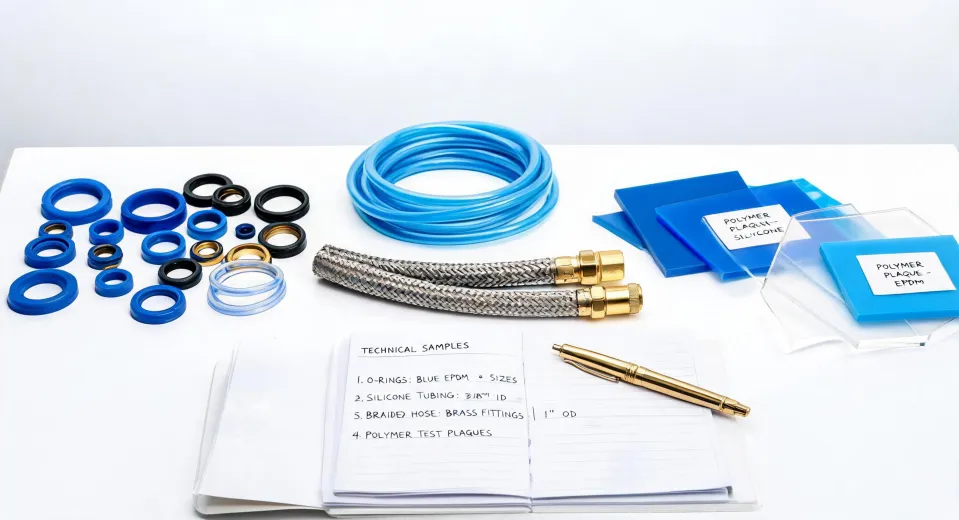
The first dimension is about whether you get exactly the material you asked for, every time. With a Trelleborg catalog item – say, an EPDM O-ring or a hydraulic hose – you know the compound, the hardness, the temperature range, and the chemical resistance. It's all documented. With a generic supplier? I once ordered 'EPDM 70' and got something that looked right but started cracking in six months (which, honestly, cost us a ton of downtime).
People think generic suppliers are cheaper because their list prices are lower. Actually, the causation runs the other way: generic suppliers can be cheaper because they skip material verification and just move inventory. The hidden cost is failures, rework, and emergency orders. In Q3 2023, we ran a test: three identical seal specs from three generic vendors. Only one matched the required durometer and tensile strength. The other two would have failed in our application.
Context: this worked for our facility, which runs continuous operations with high-temperature fluids. If you're in a low-demand environment with room for replacement, the calculus might be different.
Dimension 2: Technical Support – Who Actually Knows the Material?
Here's where the Trelleborg catalog really shined for us. When we needed a silicone hose for a food-grade line, I called their technical line. They asked about the exact fluid, temperature cycle, and cleaning protocol. Within 20 minutes I had a spec sheet and a recommendation. (Not that I always got that level of service – sometimes it took a follow-up.)
Compare that to a generic plastics supplier I used for what I thought was a simple order of plastic straws for a packaging prototype. They couldn't tell me whether the polypropylene was FDA-grade or not. I ended up spending two hours researching myself – basically doing their job. The assumption is that generic suppliers know their products, but more often than not they're just order-takers.
And about plastic restorer – I had a colleague ask me if we could restore faded plastic parts with something off-the-shelf. That's a classic causation trap: people think a restorer can bring back degraded plastic, but usually the UV damage is permanent. Trelleborg's engineers explained the difference between surface cleaning and material degradation, which saved us from wasting money on snake oil.
Dimension 3: Environmental Data & Recycling – The 'Is ABS Plastic Recyclable?' Question
A newer concern for us is sustainability. Our operations team started asking, 'Is ABS plastic recyclable?' and 'Can we recycle the hose assemblies?' I'll be honest – I didn't have a clue. With generic suppliers, I got shrugs. With the Trelleborg catalog, I found material data sheets that included recycling codes and end-of-life guidance. Turns out ABS is technically recyclable, but only if it's clean and separated from other materials (which is rarely practical for industrial scrap).
That kind of detailed answer matters when you're trying to meet corporate ESG goals. It's not just about the part; it's about knowing what happens to it afterward. The generic route left me with vague promises and no data.
So When Should You Use Trelleborg Catalog vs. Generic Suppliers?
I'm not saying you should never buy from a generic supplier. Honestly, for non-critical items like simple plastic spacers or standard-issue silicone plugs, a generic distributor can work fine – especially if you've got a solid spec and you're willing to do your own quality checks. But here's my rule of thumb:
- Use Trelleborg catalog when: the part touches your process (seals, hoses, custom components), you need certified material data, or you're new to the application and need hand-holding.
- Use generic suppliers when: it's a commodity with zero performance risk, you have in-house material expertise, or the volume is too low to justify a longer lead time.
In our case, after that 2023 test, we moved about 70% of our rubber and plastic procurement to Trelleborg. The remaining 30% stays generic – mostly stuff we've been buying for years with no issues. Your mileage may vary if you're in a different industry or have different risk tolerance.
Bottom line: a dedicated engineered supplier like Trelleborg costs a bit more on the invoice, but the total cost of ownership – time, rework, and peace of mind – is way better than I expected. And if you're ever on the fence about a material, ask for the data. An informed customer is the best customer, and Trelleborg (so far) seems to agree.