Friday, 2:47 PM
My phone buzzed with a call I've taken more than 200 times in the last seven years: a plant with a critical failure, a deadline measured in hours, and nobody in the mood for small talk.
"Packaging line's down." Mark didn't bother with a greeting. "An O-ring blew on the nitrogen seal. We've got cocoa butter spraying across four meters of floor. Maintenance window opens tomorrow at 7 AM. Can you get me a replacement before then?"
Not "can you help." It never is. The real question is whether I can identify the right part, verify it, and get it to the loading dock before the window closes. And I've learned that "right part" doesn't start with the size.
Why I Ask "What Material?" Before "What Size?"
In my first year coordinating emergency parts for industrial plants, I made the classic spec error. A customer said "standard O-ring." I shipped a generic nitrile one. Their application ran at 150°C with intermittent steam. It lasted eleven days before it split.
That mistake cost me a $600 redo, a bruised reputation, and a permanent rule: "standard" doesn't mean anything until you've confirmed the compound. NBR, EPDM, FKM, silicone, PTFE — those aren't marketing labels, they're ASTM D1418 classifications, and they're not interchangeable. In a food plant that gets hot caustic washdowns, the material isn't the last detail you check. It's the first.
So when Mark told me the failed O-ring came from a bargain "multi-purpose repair kit" they'd bought online, I didn't shrug and reach for the catalog. I asked the question that probably saved his weekend:
"Do you know what material it actually was?"
Silence. Then: "It's... an O-ring. Black one."
Red flag.
In seven years of triaging rush orders, I've built a mental checklist before any part leaves our dock: compound confirmed, dimensions measured, rating verified, source documented. If any of those boxes is empty, the order doesn't move. That policy came from a 2023 incident where a mislabeled part cost a client a full production shift. Never again.
Three Emergencies Before Lunch
While I searched our inventory for the right replacement, Mark kept adding to the list. "Oh, and we're trialing a new artisan chocolate bar next month. Need about thirty silicone chocolate molds, food-grade, clean release. You quoted us on that a while back."
I had. Trelleborg's food-grade silicone range checks the boxes that matter in a chocolate kitchen: non-reactive, stable across the range of temperatures the plant cooks at, no plasticizers that can migrate into product. FDA 21 CFR 177.2600 compliance, if you want the paperwork. The project had stalled months ago. Now it was urgent again, because at a food plant, everything is urgent after something breaks.
Then I heard his maintenance tech in the background. Mark covered the phone, said something, and came back: "Johnny's also trying to figure out how to mount the air hose reel in the maintenance bay. The instructions are useless. You ever mounted one?"
Yes. More times than I can count.
I gave him the short version: mount it high enough that the hose runs clear of the workbench; find the studs first, because that bracket won't hold in drywall; and lock the spindle before you feed the hose through. If the reel has a swivel base, angle it so the hose pulls straight from the wall outlet. "Send me a photo when it's up."
Meanwhile, my desk phone lit up again. A pool contractor needed a Trelleborg PP pool sealing profile — that's polypropylene pool construction, if you're not in that world — before a health inspection Monday. The no-name profile he'd installed had bowed after three weeks in chlorinated water. Same disease, different color.
I added it to the courier's route for the same afternoon. Then I went back to the O-ring problem.
The Unmarked Part of the Story
Here's the thing about buying O-rings from bargain suppliers: you get unmarked parts with no lot traceability and no confirmed compound. The one that failed on Mark's nitrogen seal was a perfect example. It looked like FKM. It felt like FKM. It was the right AS568A dash size — Mark read the caliper measurements to me, and I didn't need to look them up.
But it didn't come from a certified FKM batch. After months of heat cycling and caustic washdowns, it failed the way a $0.30 stamped part fails when it meets conditions it wasn't designed for. First a sickly leak. Then a blowout that painted the packaging hall in chocolate.
Not ideal, but workable? No. In a food plant, an unverified O-ring is a contamination event waiting to happen.
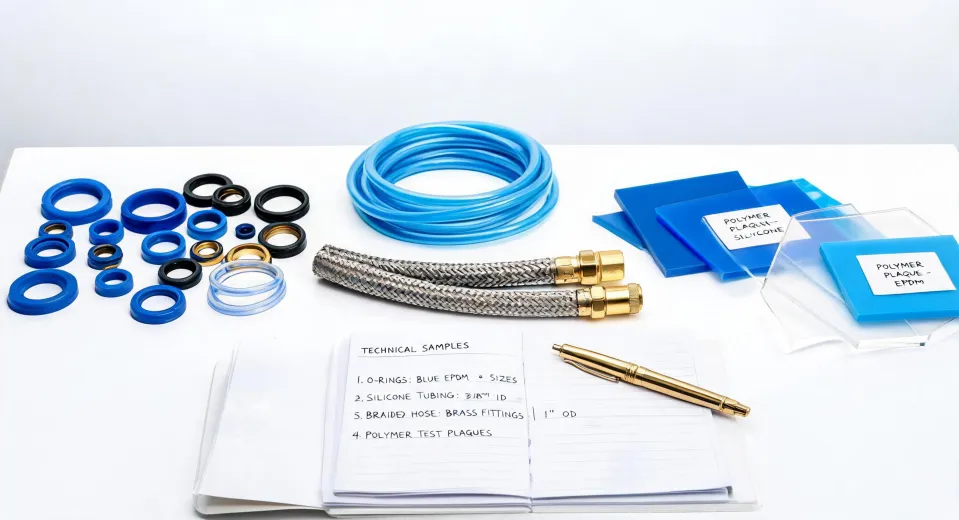
The fix was a Trelleborg Viton o-ring kit — proper FKM, the grade that handles the washdown chemicals and the heat, with batch traceability. The branch two states over had the full kit, every size Mark's crew needed, rating verified.
Then came the decision point. Ship the full kit overnight for $90, or take a partial kit from a closer branch for $45 and mix in loose parts from our shelf? Mixing sources is how traceability gets lost. No-brainer. Full kit, rush shipping.
The kit cost $120. The rush cost $90. Mark's alternative was eighteen hours of downtime, a $12,000 cleanup, and a missed delivery to their biggest retail customer.
Do the math. The bargain bag cost $30. The emergency it caused cost more than $12,000. The Viton kit — the "expensive" option — would have been cheaper than the bargain bag if they'd bought it first.
That's the part of total cost that never shows up on the invoice.
6:52 AM
The courier rolled into the plant's lot eight minutes before the maintenance window opened.
Mark's crew swapped the Viton O-rings into the nitrogen seal, torqued everything to spec, and cycled the line three times. Clean. No leaks. No cocoa butter rain.
Johnny's air hose reel was already up by then. Mark had sent me the photo at 6 PM the night before: reel mounted high on the wall, hose coiled, studs found, workbench clearance perfect. His text read:
"This thing's a game-changer in this bay."
Exactly what we needed to hear.
The silicone chocolate molds arrived two weeks later, cast in Trelleborg food-grade silicone. The pilot batch released clean — no sticking, no residue, no surprises.
The Bottom Line
I can only speak to what I've seen in industrial food plants and heavy-use environments. If you're rebuilding a lawnmower carburetor in your garage or swapping a hose on a sprinkler valve, a generic O-ring assortment is probably fine. Your mileage may vary — and I hope it does, because that's a far cheaper lifestyle.
But for critical, high-temperature, caustic-washed applications, the brand isn't vanity. It's traceability. It's a confirmed compound, a tested durometer, and a certification trail. Trelleborg rubber products carry that trail. Bargain bags don't.
So here's what that weekend reinforced, in the order I think about it:
- Unit price is the most expensive way to buy a critical part.
- Material first. Size second. Certification third. In that order.
- When your deadline is measured in hours, a supplier who can verify what they're shipping is worth more than the shipping cost.
The failed O-ring cost a little over $12,000, all things considered. The fix cost $210 and a phone call with someone who asked the right question.
Worth every cent.