
A folder lands on my desk
In February 2024, our facilities manager dropped a folder on my desk and said the sentence every office administrator loves: "We're repointing the warehouse roof, and I need this ordered by Friday."
I'm the office administrator for a 220-person company on the edge of the industrial park. I took over purchasing in 2020, and I currently manage all the facility and operational spend — roughly $340,000 a year across about 11 vendors, depending on how you count the ones I keep trying to fire. I report to both operations and finance. Two bosses, one budget, and an unspoken rule that I'm the one who gets blamed when materials show up late or an expense report gets rejected.
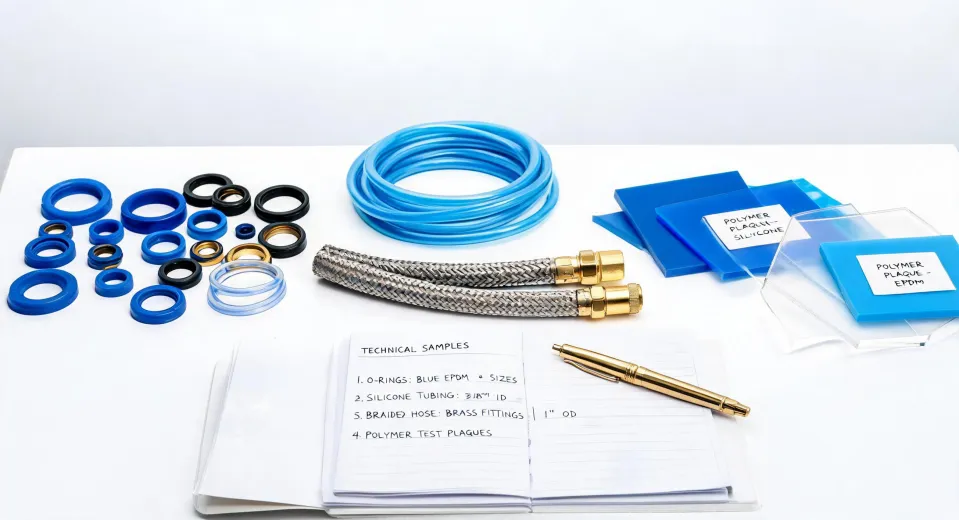
The folder had a spec sheet, a hand-drawn sketch of the roof section, and a list of materials the contractor wanted us to source ourselves to "save on markup." Fair enough. The list: a new layer of 2-inch foam board insulation for the parapet section, a couple of cartridges of Dow Corning silicone 795 for the exterior joints, some Dow Corning silicone compounds for the equipment gaskets inside, oil filters o-ring sets for the maintenance team's compressor, and a roll of polyethylene rubber for fabricating a few custom seals.
For the record, I'm not a roofer. I'm a person who knows how to read a spec sheet and how to call someone who actually is.
The part where I ignored my gut
The foam board was the big-ticket item, so I got three quotes. Two came from distributors we'd used before. The third was a new vendor an old contact passed along — and they were 22% cheaper on what looked like identical specs. That is the "best 2 inch foam board insulation" search result you dream about at 4 p.m. on a Thursday.
Here's the thing: their quote came back fast, but their follow-up emails were three days slow. My gut said that was a preview of how they'd handle a delivery problem. The numbers said otherwise — 22% is 22%, and I had a Friday deadline and a contractor already scheduling crews.
I went with the numbers. I also skipped the step where I usually call two previous customers and ask specifically about spec accuracy and invoicing — the boring questions, the ones that actually catch problems. I told myself, "What are the odds they send the wrong thickness on a 2-inch callout?"
The odds caught up with me on a Tuesday morning.
What showed up on the truck
The boards arrived labeled "2 inch." Two of the eight pallets were actually 1.5-inch stock, with a 2-inch label printed over the original. I don't know whether it was the mill's error, the distributor's, or the driver's — and honestly, at that point, it didn't matter. The contractor couldn't install them without redoing the flashing detail, and the whole point of buying our own materials was to speed things up, not slow them down.
I called the vendor. It took two days to reach anyone who could authorize a return. (Ugh.) By then, the installer's crew was standing around, and standing crews are the most expensive thing on any jobsite. The replacement boards came from one of our regular distributors at the non-discounted price, plus rush freight. Total damage: about $3,800 between the delay, the restocking fee, and the rush shipping — before I count my own time, which finance certainly did.
The invoice problem
Then came the second shoe. The original invoice arrived as a scanned handwritten receipt — no purchase order reference, no tax ID. Our accounts payable team rejected it outright. Twice. I spent the better part of three weeks chasing a proper invoice while the return credit sat in limbo.
That's when I stopped being polite about it and started being systematic. Per FTC advertising guidelines (ftc.gov), vendor claims have to be truthful, not misleading, and substantiated with evidence — and the same standard that applies to a product listing applies to whether a supplier can produce a compliant invoice. If a supplier can't meet basic documentation requirements, the "savings" are theoretical.
To be fair, the vendor eventually fixed both the invoice and the return. But I'd burned a month, a chunk of credibility with finance, and $3,800 of a budget I was already defending. Granted, some of that was my own fault for skipping my usual checks. That's the part that stung more.
How I rebuilt my list
After that mess, I consolidated the rest of the project through two established distributors and one specialty silicone source. I stopped chasing the lowest line item and started pricing for total cost:
- Specs: confirmed in writing, including thickness tolerance and the manufacturer's data sheet, before any PO goes out.
- Invoicing: PO number, tax ID, and payment terms confirmed up front. In that order.
- Lead time: quoted in business days, not "about a week," and tracked against a real calendar.
I also verify environmental claims now. The foam board listing had a "recyclable" badge on it, and per FTC Green Guides (16 CFR Part 260), that kind of claim has to be substantiated — a product marked recyclable should actually be recyclable where at least 60% of consumers have access. If a vendor can't produce the backup, I don't repeat the claim in my own documentation. Small thing, but it has saved me from putting the company's name behind something I couldn't defend.
What I mean is that the total cost of a material isn't just the unit price — it's the price plus your time, plus the risk of rework, plus the chance that finance rejects the paperwork and you're suddenly explaining a gap to two different bosses. The unit-price spreadsheet doesn't show any of that.
For the silicone products specifically, I moved to a single distributor with verified Dow Corning stock — the Dow Corning silicone 795 for weatherproofing joints, the Dow Corning silicone compounds for equipment uses. Same brand, one invoice, one point of contact when something's off. I also set up a standing small-parcel order for oil filters o-ring sets and polyethylene rubber sheet stock, so the maintenance team isn't putting in one-off requests every time a seal fails. Their online ordering portal cut our turnaround on those small items from about five days to two, and — probably more important — it stopped the "anyone can call the supplier directly" chaos we used to have, more or less. Efficiency is not glamorous, but it is cheaper.
That last part sounded trivial when I first set it up (this was back in mid-2024). It wasn't. When three people can each call the supplier for a different seal size, you get three different prices, three different lead times, and nobody knows what the monthly spend actually is. Moving those requests into one portal with one account meant I could see the spend in one place and negotiate from a position of "we buy this every month," not "we bought it once in a panic."
What I do now
I won't pretend I've solved purchasing. I still get surprised. But I stopped treating "best 2 inch foam board insulation" as a price search and started treating it as a specification problem. The word "best" in a search bar is usually a question about total cost, not a question about the sticker price, and the two only line up when you've done the boring verification work first.
If I could pass one thing along to another admin doing facility purchasing: the cheapest quote and the best deal are not the same object. The cheapest quote is a number. The best deal is that number plus the invoice plus the lead time plus the person who picks up the phone when something goes wrong.
I learned that the expensive way. Once. (Thankfully only once.)