The Short Answer: It's About Certainty, Not Just Quality
When you're down to the last few O-rings before a production line shutdown, the question isn't whether Trelleborg is the cheapest option. It isn't. The question is whether the cost of being wrong outweighs the premium. For me, after managing industrial components procurement for a mid-size manufacturing facility, the math is clear: paying a bit more for a Trelleborg O-ring that you know will arrive on time and fit right is cheaper than the alternative.
I handle roughly $200,000 annually in component spend across about 15 suppliers. Seals, gaskets, and a fair amount of PVC gloves for our cleanroom team. I don't have an engineering background—I came into this role from admin five years ago. But I've learned that on industrial component purchases, focusing on unit price is a trap.
What Most Buyers Miss: The Hidden Cost of the 'Cheaper' Seal
The question everyone asks is, "What's your best price on 5000 O-rings?" The question they should ask is, "What happens if those O-rings fail or show up late?" Most buyers focus on per-unit pricing and completely miss the ripple effect. A rejected batch means production delay. Production delay means missed delivery dates. Missed delivery dates means upset customers. That $0.05 savings per O-ring evaporates fast against a $10,000 order penalty.
I learned this the hard way. In early 2023, I sourced a generic nitrile O-ring batch from an online supplier. Price was 40% below my usual Trelleborg line. They arrived on time, looked correct, and cleared visual inspection. But 12% failed during assembly—hardness was off spec. Our engineering team flagged it during a routine check before a major shipment. We avoided a field failure disaster, but I still lost two days of production and had to pay for an emergency Trelleborg replacement. That "cheap" batch ended up costing us 30% more than if I'd just ordered from Trelleborg in the first place.
Why Trelleborg's Official Website Became My First Stop
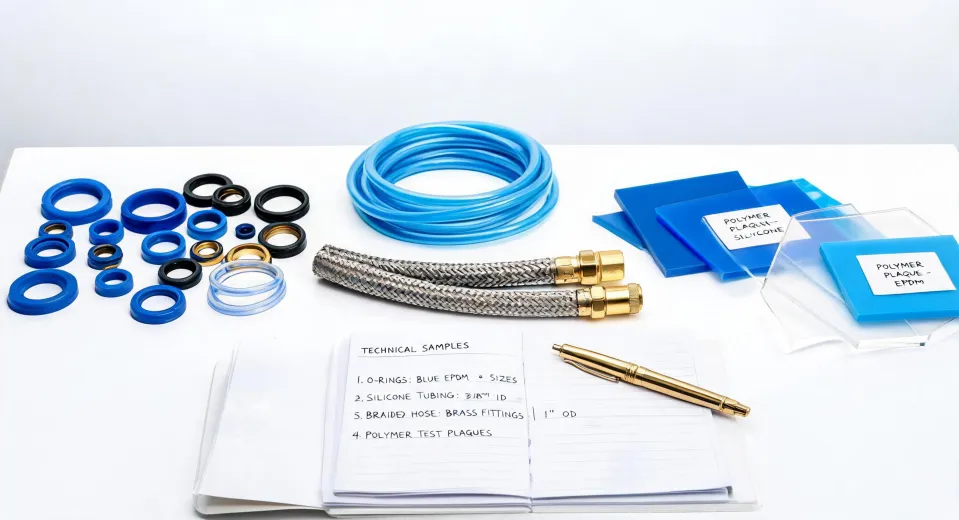
After that, I shifted priorities. Now, I start almost every seal search on the Trelleborg official website. Not because their marketing is flashy—honestly, it's pretty functional. But because the O-ring configurator tool there is a lifesaver for a non-engineer like me. I can filter by material (EPDM for our outdoor applications, silicone for cleanroom use), input dimensions, and get a spec sheet and a part number instantly. No waiting for a sales rep to call back. No guessing if the material grade is right.
Last month, I needed a custom gasket for a new piece of equipment. The configurator let me plug in the parameters, and it suggested a material blend I hadn't considered. I cross-referenced it with our maintenance engineer, and he agreed it was a better fit. That kind of resource saves me hours. The alternative? Calling three suppliers, leaving messages, waiting for quotes, praying they understand what I need.
But It's Not for Everyone
Look, I'm being honest: we don't buy everything from Trelleborg. For high-volume, generic hardware that changes year over year, we still shop around. And if you're a one-person operation buying a handful of seals, going straight to the official site for every single order might not be worth the overhead. My experience is based on a steady, moderate-volume demand—maybe 60-80 component orders a year. If your flow is different, your mileage will vary.
The Emergency Test: Where Trelleborg Earns Its Keep
Here's the scenario that cemented my loyalty. In March 2024, our main production line schedule got pushed up by three weeks. I needed a specific Trelleborg O-ring—a high-temperature silicone variant—delivered in four days. Standard lead time was ten. I called our distributor, explained the urgency, and they put a rush on it. I paid about 35% more for the express service. Honestly, I didn't hesitate.
Why? Because the alternative was missing the production window. A line idle for even six hours costs us around $3,000. The rush premium? Under $400 total. The time certainty was worth every penny. The part arrived exactly when promised, it fit perfectly, and the production line hit its target. There's a real satisfaction in that—after all the coordination and stress, seeing it work out exactly right.
What About PVC Gloves and the 'Can You Bake Silicone Molds' Question?
I get asked odd things sometimes. Like, "Can you bake silicone molds at the same temperature as rubber?" That's a material science question, way beyond my pay grade. But I know enough to point people to Trelleborg's technical datasheets. And for the cleanroom, we've standardized on their PVC gloves—they're reliable, and more importantly, our lab manager trusts them. Trust from the internal customer is a big deal for me.
The Bottom Line
So, yes. I pay more for Trelleborg. The brand's engineering resources, the configurator tools, and the delivery reliability justify the premium for our scale and needs. But I'll be the first to say: you need to evaluate your own situation. If your operations can tolerate a two-week wait and you have in-house material testing, a cheaper alternative might work. For us, the cost of being wrong is too high. That's the real takeaway—not that Trelleborg is 'the best' in a vacuum, but that for our specific set of risks, it's the safest bet.