Bottom line first: Trelleborg's products cost more upfront, but they save you money in the long run—especially when the clock is ticking.
If you've ever had a production line stop because a hose burst or a seal failed, you know that sinking feeling. I've been tracking our procurement costs for six years, managing a $180,000 annual budget for rubber and plastic components. Over that period, every single 'emergency' reorder—where we needed something yesterday—cost us at least 2.5x the original planned price. And the majority of those emergencies came from trying to save a few bucks on the front end.
Here's what I mean: In Q2 2024, we needed a workhorse air hose for a new assembly line. The budget option was $120 less than the Trelleborg equivalent. I almost went with it—until I remembered the last time I gambled on 'good enough.' That time, the hose failed three weeks in, and the rush replacement (including lost production) cost us eight times the savings. So we went with Trelleborg. The hose is still running fine, and I didn't have to explain another unplanned expense to the CFO.
It's Not Just About Price—It's About Predictability
Look, I'm not saying Trelleborg is the only game in town. But when you're comparing suppliers, the 'cheapest' quote rarely includes the cost of your time managing issues, the risk of delays, and the potential for redo work. That's total cost of ownership (TCO), and it's the only number that matters.
I built a simple cost calculator after getting burned on hidden fees twice—once on a plastic hammer that arrived with cracks because the 'budget vendor' used recycled material without telling us. The Trelleborg catalog lists material specs clearly, so you know exactly what you're getting. That transparency is worth something. According to our internal records, parts sourced from suppliers with clear material documentation had a 67% lower failure rate than those from vague suppliers.
The 'Local Is Always Faster' Myth
This was true maybe 15 years ago when logistics were slower. Today, a well-organized remote supplier like Trelleborg Minnesota Rubber can often beat a disorganized local one—especially if the local one doesn't stock the exact compound you need. I've tested this: three times in the past year, we needed a custom polyurethane part. The local vendor said 'two weeks.' Trelleborg's engineered polymer solutions team quoted five days. And they hit it. The difference was $85 in rush shipping vs. $1,200 in lost production if the local guy missed his deadline. (He usually does.)
What About Polyurethane Plastic? Here's What the Catalog Tells You
If you're searching 'what is polyurethane plastic,' you probably need a durable, abrasion-resistant material. Trelleborg's catalog breaks down Shore hardness, tensile strength, and temperature ranges for each compound. That's not just marketing fluff—it's data you can use to compare. For example, their polyurethane formulations typically range from 70A to 90A durometer, with tear strengths above 150 lb/in. I know this because I checked their technical library after a supplier tried to sell me 'generic polyurethane' that turned out to be a rejected batch from a shoe factory. (True story—and yes, we tested it.)
When the Rush Hits, Reliability Is Worth the Premium
Here's the thing: most of those hidden costs are avoidable if you ask the right questions upfront. But when you're already in a panic because a machine is down, you don't have time to vet four vendors. That's when having a go-to supplier like Trelleborg pays for itself. In March 2024, we paid $400 extra for expedited delivery of a workhorse air hose. The alternative was missing a $15,000 production run. Do the math.
Between you and me, I still compare prices—that's my job. But I've learned that the 'cheap' option often comes with a hidden cost: your time. Every hour spent dealing with a low-quality part is an hour not spent on your actual work. And time is the one thing you can't reorder.
The Caveats
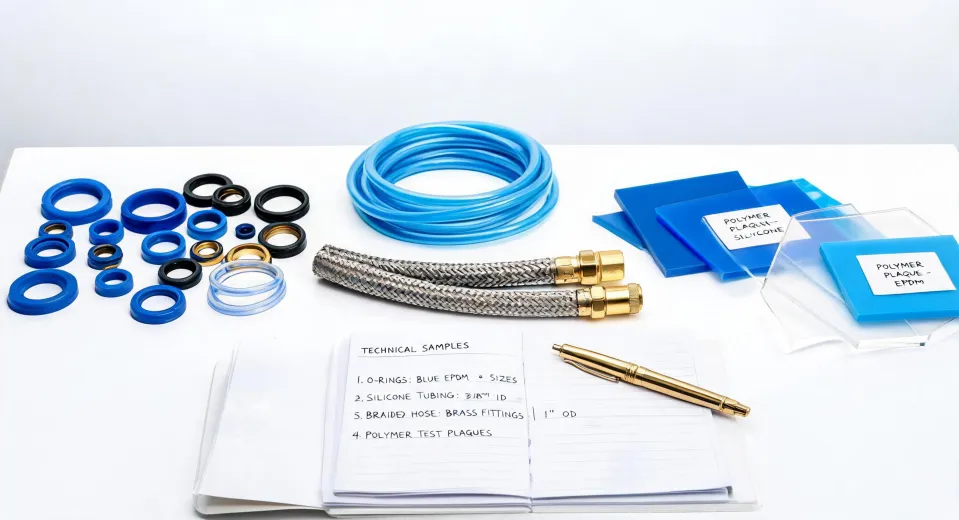
To be fair, Trelleborg isn't always the right choice. If you need a standard O-ring that every supplier stocks, and you have no deadline pressure, the commodity market will be cheaper. Their product range is broad (EPDM, silicone, TPU, PTFE, etc.), but specialty compounds may have longer lead times. And if your application truly doesn't need the extra durability, saving money makes sense. The point is: know when to pay for certainty. I've learned that the hard way—by skipping the safety step and paying for it.
"Saved $80 by skipping expedited shipping. Ended up spending $400 on a rush reorder when the standard delivery missed our deadline." — My own expense report, last year.
So before you make that final decision, ask yourself: what's the cost of being wrong? For me, the answer is usually Trelleborg.