The Day I Assumed EPDM Was Recyclable
In February 2024, I sat in a meeting with a customer who had a clear requirement: they needed seals for a 3-inch PVC pipe system, and the entire assembly had to be fully recyclable. The customer's sustainability officer was in the room, and the word "recyclable" came up at least six times. I nodded confidently. "No problem," I said. "We'll use Trelleborg EPDM O-rings — they're a standard choice for PVC connections."
I'm a procurement specialist handling sealing component orders for five years now. I've made 14 documented mistakes that collectively cost our company over $8,000. This particular one would add to that tally. But it also taught me a lesson I still use today.
Why I Thought EPDM Was a Safe Bet
EPDM (Ethylene Propylene Diene Monomer) is one of Trelleborg's most popular materials. It's weather-resistant, ozone-resistant, and works beautifully with water and many chemicals. I'd ordered EPDM seals dozens of times without issues. Plus, the customer's 3-inch PVC pipes were standard, and EPDM O-rings are widely recommended for such applications.
But here's the blind spot (and it's a big one): Most buyers focus on price and performance specs, and completely miss the end-of-life recyclability of the material itself. I was one of them. I assumed that because "EPDM" sounded green (ethylene-propylene, like plastic), it must be recyclable. Wrong.
The Expensive Discovery
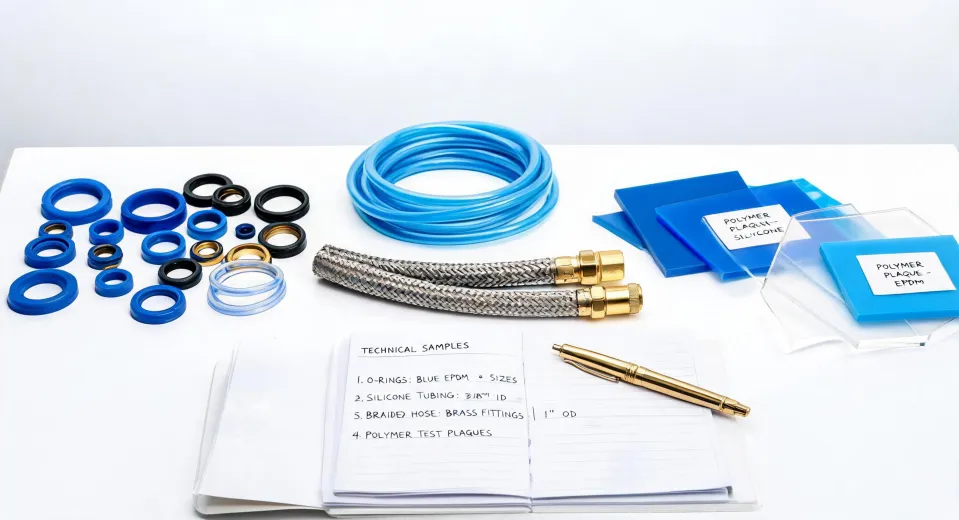
Two weeks after the order went through — 2,000 EPDM O-rings, custom-sized for the 3-inch PVC flange — the customer's sustainability team flagged a problem. They asked: "What's the recycling code for EPDM?" I had no idea. A quick search revealed the truth: EPDM is a thermoset rubber. Once cured, it cannot be re-melted or reprocessed like thermoplastics. It's not recyclable in conventional municipal recycling streams. The customer rejected the entire shipment.
That's when I called Trelleborg's technical support line. The engineer on the phone (thankfully) didn't laugh at me. He patiently explained that EPDM is a thermoset elastomer, not a thermoplastic. Then he asked, "Have you considered TPU?"
TPU to the Rescue (With a Cost)
TPU (Thermoplastic Polyurethane) is a different animal. It's a thermoplastic, meaning it can be melted and reprocessed. Many TPU grades are 100% recyclable. Trelleborg offers a range of TPU compounds that meet the same performance requirements — chemical resistance, hardness, temperature range — but with a recycling profile that satisfied the customer's sustainability officer.
We reordered 2,000 TPU O-rings, this time sized correctly for the 3-inch PVC flanges (same size, different material). The cost: $1,500 in expedited production and lost time. Plus the original EPDM order — $1,200 worth of O-rings — sat in a box labeled "scrap."
The total mistake cost: $1,500 in rework + $1,200 in wasted material + a two-week project delay. Not to mention the credibility hit with the customer.
What About Silicone? (Another Common Misconception)
During the same project, someone asked me: "Is silicone recyclable?" I almost made another mistake by saying "yes" confidently. In reality, silicone (like Trelleborg's silicone grades) is also a thermoset — not easily recyclable through standard programs. Some specialized recycling processes exist, but they're rare and expensive. The question everyone asks is "Is it recyclable?" The better question is "How is it recycled?"
The Checklist I Now Use
After this disaster, I created a simple pre-order checklist for our team. It includes these three questions:
- What is the material family? (Thermoset vs thermoplastic — this is the make-or-break question for recyclability)
- Does the customer's recyclability requirement apply to the entire assembly, or just the plastic pipe?
- Have we verified the material's recyclability with the supplier's technical data sheet?
For Trelleborg specifically, I now default to visiting the Trelleborg official homepage and searching their material selector tool. It clearly indicates whether a compound is thermoplastic or thermoset, and often includes recyclability notes.
Lessons Learned (The Hard Way)
Here's what I'd tell anyone buying seals for PVC, polyurethane, or any plastic component:
- Don't assume material names imply recyclability. EPDM sounds like it could be plastic, but it's rubber. Thermoplastic (TPU, TPE) vs thermoset (EPDM, NBR, silicone) — learn the difference.
- Use Trelleborg's technical resources. Their engineers were incredibly helpful once I reached out. I could have avoided the whole mess by calling them before I ordered.
- Price per unit is irrelevant if the material fails the sustainability criteria. The $50 difference between EPDM and TPU per thousand units was nothing compared to the $1,500 rework.
Quality isn't just about performance — it's about perception. When that customer's sustainability team saw the wrong material, they didn't just question my competence; they questioned the entire company's commitment to their goals. That's a reputation cost that's hard to measure but very real.
Final Thoughts: My Go-To Material Guide
If you're working with Trelleborg products and need to meet recyclability requirements, here's a quick reference based on my experience:
- For PVC or 3-inch PVC pipe connections: TPU is a great recyclable choice. Trelleborg's TPU grades offer good flexibility and chemical resistance.
- For high-temperature or ozone-exposed applications where recyclability isn't a requirement: EPDM remains excellent.
- For products that must be REACH-compliant or meet specific sustainability certifications: Check the Trelleborg official homepage's Environmental Compliance section.
Mistakes are expensive, but they're also great teachers. This one cost me $1,500 and a couple of sleepless nights. But it also gave me a checklist that our team has used to catch at least 10 potential recyclability mismatches in the past year. That's $15,000 in avoided disaster — not bad for a painful lesson.