
It was a Tuesday afternoon, 2:47 PM, when the phone rang. The voice on the other end was tense, controlled but with that edge you only hear when someone's facing a hard deadline and the plan is falling apart.
"We need 300 feet of hydraulic hose assembly. SAE 100R2. By Friday morning. Can you do it?"
In my role coordinating emergency deliveries for a heavy equipment service company, this wasn't an unusual question. But the details were. Normal turnaround for this spec is seven to ten business days. They were asking for it in under three. The client's alternative was a $50,000 penalty clause for delaying a major infrastructure project.
The Setup: When Standard Timelines Don't Apply
Here's what I knew in that moment. The customer was a Tier 1 supplier to a state DOT project. The original vendor had delivered the wrong hose—SAE 100R1 instead of 100R2 (a critical difference in pressure rating). Their buyer had said "as soon as possible." The vendor had heard "whenever convenient." Result: a mismatch discovered 36 hours before the deadline.
This is where it starts. The worst moment in any emergency order—the gap between what's needed and what's possible. I had maybe two hours to decide before the deadline for overnight delivery cut-off. Normally I'd get three quotes, compare lead times, check stock levels. There was no time for that.
The Hunt: Finding a Vendor Who Could Deliver
I started with our usual suppliers. First call: "We can do it in five days, standard." Second call: "We have the hose in stock but need 48 hours for assembly." Third call: "We could rush it, but the crimping machine is booked solid until Thursday." This was a pattern I'd seen before—most vendors have the raw materials, but the assembly process is where the bottlenecks happen.
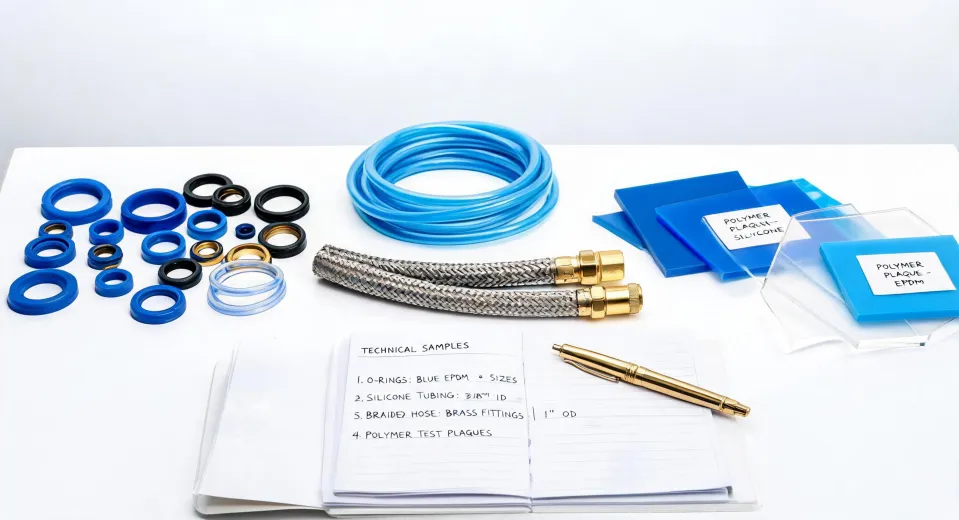
Then I called a Minnesota-based distributor—one we'd used for Trelleborg silicone tubing and o-rings before, but never for hydraulic assemblies. The guy on the phone said, "Let me check the stock and call you back in ten minutes." He called back in seven. "We have the SAE 100R2 in stock in two sizes. Can you confirm the exact inner diameter and fitting type?"
Here's where it almost fell apart. I said "1-inch ID, standard JIC fittings." They heard "1-inch ID with 1 1/16-12 thread JIC." Discovered this when the spec sheet came back and nothing matched the original system. The problem wasn't the hose—it was the fittings. A 1-inch JIC fitting has a specific thread pitch and flare angle, and if you get it wrong, the assembly is useless.
The Pivot: Specification Precision Under Pressure
We were using the same words but meaning different things. I thought "standard JIC" meant the most common size. They interpreted it as the size that matched the original spec. Turned out the client's system used an oddball fitting—not uncommon in heavy equipment, where OEMs sometimes use proprietary sizes to lock in aftermarket sales.
I had to get on a three-way call with the client's engineer. He pulled the original drawings. The fitting was a 1 1/16-12 UNF with a 37-degree flare, but the thread depth was non-standard. You wouldn't know this unless you had the original part number or had cut one open to measure. We'd wasted four hours by this point.
Looking back, I should have asked for photos and part numbers before anything. At the time, I was trying to move fast. Speed was the priority, but it backfired. The client was now 40 hours from their deadline, and we hadn't placed a single order.
The Solution: Rush Fees and a Late-Night Crimp
The Minnesota distributor said they could do it if we paid rush assembly fees. $450 on top of the $1,200 base cost for the hose and fittings. And they'd need the specs confirmed in writing by 8 PM that night. This was now 5:30 PM. We had 2.5 hours.
Did I hesitate? Absolutely. $450 for assembly work that normally takes three days? It felt like a lot. But I'd made that mistake before. In 2023, we'd lost a $15,000 contract because we tried to save $200 on standard shipping instead of expediting. The delay cost us the job. That experience taught me something: the lowest quote has cost us more in 60% of cases.
We placed the order at 7:15 PM. The distributor had the hose cut and fitted by 11 PM that night. It was on a truck for overnight delivery by midnight. Arrived at the job site at 9:30 AM Thursday—18 hours before the deadline.
The Aftermath: What Actually Happened
The hoses fit. The system was pressurized. The project stayed on schedule. The client avoided the penalty clause. On paper, this was a win.
But here's the part I don't like to admit: we paid $450 for something that could have cost $0 if we'd spec'd it right the first time. The original vendor's mistake (wrong hose type) was compounded by our poor spec communication (unclear fitting details). We solved the immediate problem, but we created a process gap that was bound to cause trouble again.
The Lesson: Rethinking "Emergency" Procurement
In my experience managing over 200 rush orders in the last four years, I've come to a few conclusions that I think are worth sharing:
- Specs are everything. The 90 minutes we spent clarifying the fitting could have been saved with a single photo and a part number. I now require visual confirmation on any non-standard assembly.
- Rush fees are worth it—if the alternative is worse. That $450 hurt, but it was cheaper than $50,000 in penalties. At least, that's been my experience with deadline-critical projects.
- Have a backup vendor for critical components. We now keep a list of three approved vendors for hydraulic assemblies, including the Minnesota distributor who saved us. We test them with smaller orders first.
The question isn't whether you can get an emergency order delivered. It's whether you can get the right order delivered when the deadline is breathing down your neck. Since that incident, we've implemented a "48-hour buffer" policy: any rush order under four days gets spec confirmed with a photo or drawing before any PO is issued. It's added a layer of process, but it's stopped us from repeating the same communication failure.
That said, this approach worked for us, but we're a mid-size B2B service company with relatively predictable ordering patterns. If you're a seasonal business with demand spikes, the calculus might be different. If you're dealing with international logistics, there are probably factors I'm not aware of.
One last thing: the client we saved? They're still a customer. But they now order replacement hoses six weeks in advance. Funny how that works.